
Why Your Fleet Insurance Keeps Going Up — And What Actually Brings It Down
If you run a commercial fleet, you've probably noticed a painful trend at every renewal: your premium keeps climbing, no matter how careful your drivers are. You're not imagining it. Commercial trucking insurance costs per mile have risen an estimated 43% from 2019 to 2025, and hit a record 10.2 cents per mile in 2024 alone (source: Truck Writers; Commercial Carrier Journal). What makes this especially frustrating is that the increases have continued even as safety has improved industrywide — injury crash rates dropped 15.3% and fatal crash rates fell 13.9% compared to 2019 peaks, according to Commercial Carrier Journal's reporting on ATRI data.
Insurers Have Changed the Rules
Here's the part a lot of fleet managers haven't caught up to yet: much of this hard market has little to do with any individual fleet's driving record. Rates are climbing across the board due to nuclear litigation verdicts, sustained insurer losses, and broader market pressure — meaning your premium can go up even in a completely clean year (source: Marshall+Sterling).
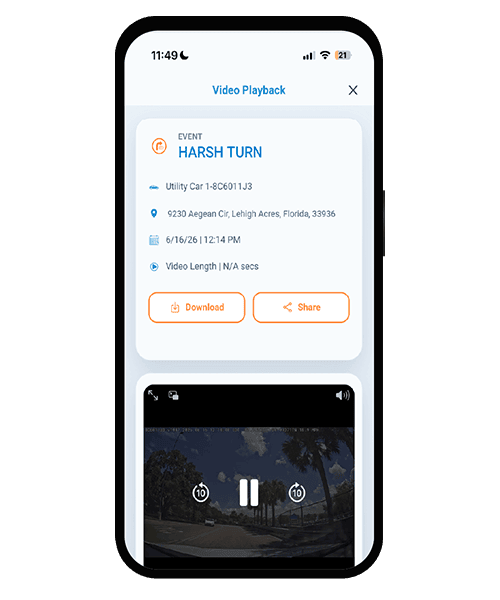
What insurers are increasingly rewarding instead is documentation. Carriers are placing more weight on a fleet's FMCSA safety profile, loss history, and evidence of an active safety program — not just whether a camera happens to be mounted on the dash (source: Marshall+Sterling). That's where a video management platform like LANA Fleet comes in, giving fleet managers a way to search, review, and act on footage across every vehicle instead of digging through raw video one incident at a time.
The Math Behind the Premium
It's worth putting real numbers next to this, because the case for AI dash cams isn't theoretical anymore:
- According to FMCSA's official 2025 crash cost methodology, the average cost of an injury crash involving a large truck is $326,810 in 2023 dollars — a figure that puts the return on accident prevention in stark terms (source: FMCSA).
- Small fleets feel the pressure hardest: carriers with 5 to 25 trucks paid more than 20 cents per mile in 2024, roughly double the 10 cents per mile averaged by larger fleets — largely because smaller carriers have a thinner safety-record sample size for insurers to price against (source: Commercial Carrier Journal).
- Industry coverage is explicit that dash cams, telematics sharing, and stricter distracted-driving policies are among the concrete tools fleets are using to reduce claims and work toward better renewal terms (source: Transport Topics).
When you line those numbers up, the pattern is clear: the fleets bringing their premiums down aren't the ones with the most cameras. They're the ones with the smartest ones.
Why "Just Having a Camera" Isn't Enough
The old model of fleet dash cams was simple: point a lens at the road, record continuously, and hope you never need the footage. That model still exists, but it's increasingly the reason fleets get stuck with the steepest renewal increases. The broader shift in the market is toward rewarding fleets that can show ongoing, structured safety investment — not just a camera bolted to the windshield (source: Marshall+Sterling; Transport Topics).
That's the real shift happening in fleet management right now — from documentation after an incident to prevention before one, backed by data you can actually hand to your insurance provider.
Where OcuCam Fits In
This is exactly the gap OcuCam is built to close. Instead of leaving you with hours of unstructured footage that only matters after something goes wrong, OcuCam's AI-powered fleet dash camera system is designed to give you the kind of ongoing safety data insurers are now paying closer attention to — the evidence trail that turns a good driving record into leverage at renewal, and turns a bad-luck incident into a documented, defensible non-issue. Paired with the LANA Fleet video platform, that footage becomes something you can actually search, share, and use — not just store.
If your fleet is still running basic cameras — or worse, none at all — the cost of waiting isn't just risk on the road. It's leverage left on the table at every single renewal.
Frequently Asked Questions
How can dash cams help lower fleet insurance premiums?
There isn't a universal discount every carrier applies, but industry reporting points to dash cams, telematics sharing, and stricter distracted-driving policies as concrete ways fleets are working to reduce claims and position themselves for better renewal terms.
Do all insurance carriers offer discounts for AI dash cams?
Not universally, and it varies by carrier and fleet risk profile. The broader trend, however, is carriers placing more weight on documented safety programs and a fleet's FMCSA safety profile when setting renewal pricing.
What's the difference between a basic dash cam and an AI dash cam for insurance purposes?
A basic dash cam only records footage for you to review manually after an incident. An AI dash cam actively detects events like harsh braking, distracted driving, or following distance in real time, and turns that into structured safety data insurers can use to evaluate risk.
How quickly do fleets see insurance savings after installing AI dash cams?
Most fleets don't see savings immediately, since premium adjustments typically happen at renewal. However, safety improvements and reduced incident rates often begin showing up within the first few months of consistent use and driver coaching.
What data do insurers want to see from fleet dash cameras?
Insurers increasingly want more than raw footage. They're looking for declining safety event frequency over time, documented driver coaching records, and clear evidence from incidents where the fleet vehicle was not at fault.
Ready to Stop Overpaying for Insurance You Can't Prove You Deserve?
See how OcuCam's AI-powered dash camera system helps fleets build the safety documentation insurers are asking for — and start working toward better terms at your next renewal.
Explore OcuCam AI Fleet Dash Camera →